





How to Build an Effective Waste Collection System for a Warehouse
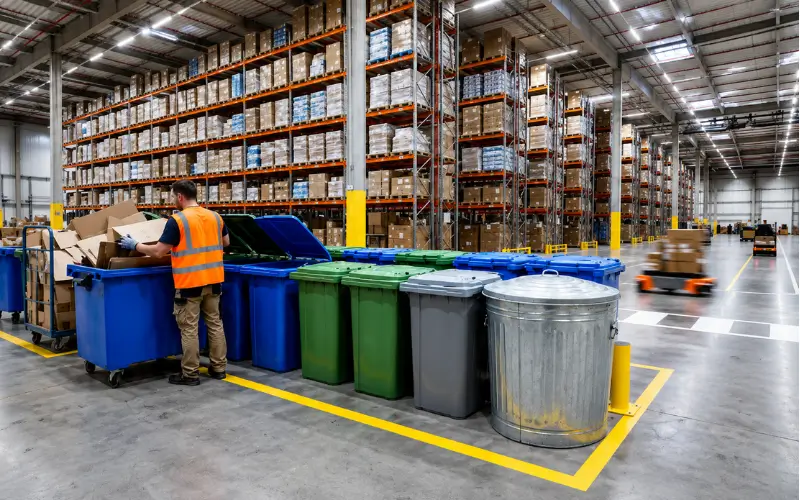
Warehouses don’t generate waste the way a typical office does. There may be several teams working in various areas simultaneously, and pallets, shrink wrap, cardboard, damaged stock, and packaging materials take up a vast area, such as thousands of square meters. One trash receptacle at the end of the door won’t suffice.
In fact, when it comes to creating a system that works, it’s not just about placing bins around the warehouse and hoping for the best; it’s about thinking through the process from start to finish. Let’s quickly put one together step-by-step.
Step 1: Audit What Your Warehouse Actually Throws Away
Knowing what you have to deal with before deciding on bins, schedules, or collection points. The typical assortment of waste most warehouses produce includes packaging waste—such as cardboard and shrink wrap, unsellable or damaged items, pallets, and break room and office waste.
Take some days to observe what is filling up your current waste spaces. This will indicate what the largest percentage of waste in your waste stream is, and you will not have to waste resources designing a system around assumptions that don’t occur in reality.
Step 2: Map Where Waste Actually Gets Generated
Warehouses are not “one size fits all. The accumulation of waste is different by area near receiving docks, packing stations, storage aisles, and shipping areas. A single-point system typically doesn’t work, because it is too distant from the place where waste is being generated.
Walk the floor and identify material buildup points during normal operations. These are the logical places to put your collection bins, not where you found any space.
Step 3: Choose Bins That Match Each Zone’s Waste
Various areas in a warehouse require different types of containers. Regular cardboard and plastic waste from packing stations requires regular, easy-to-access bins. Receiving docks deal with bulkier packaging that needs larger capacity. Standard general waste bins are required for break rooms.
Many warehouses buy a combination of waste bins from reputable suppliers like Crateco Pack LLC because they can ensure that they have consistent, durable bins of every size, making it easier to match each zone with a bin designed to collect what they do.
Step 4: Set Up Centralized Collection Points
After waste is collected at source, it must have a place to be taken until it is picked up by a waste hauler. A central waste collection point, typically close to the loading dock or an external access area, allows a warehouse to collect waste from several waste zones into fewer, larger containers.
This is important for efficiency. Rather than having to get into the warehouse, waste will be staged in an accessible area, ensuring waste is collected quickly, without disrupting daily operations.
Step 5: Build a Collection Schedule Around Actual Volume
An inflexible timetable will cause congestion in areas that are in high demand and underutilization of areas that are not. Schedule your internal collection system (movement of waste from source bins to collection centres) in relation to the rate of waste production in each area.
If the areas that need to be emptied are especially busy, such as packing stations, they may require more frequent waste movements than is typical, which could be several times a day, whereas in quieter storage areas, waste may need to be moved less often, such as once every several hours.
Step 6: Assign Responsibility and Train Staff
Any waste system that has no clear owner breaks down in a few weeks. There must be someone to monitor bin levels, arrange for internal collection, and alert anyone to problems before they get out of hand.
Waste disposal and the logic behind working with the waste system must be understood quickly by staff. When it comes to keeping things consistent, a short walkthrough at the time of introducing the system and reminders during onboarding training can go a long way.
Step 7: Monitor the System and Adjust as Operations Change
A good day one waste collection system may not maintain the same efficiency if there is a change in inventory volumes, new product lines are introduced, or changes in the warehouse layout. Regular monitoring of check-ins, overflow, bin usage, and staff feedback can identify issues early.
Small changes, such as repositioning a bin, adjusting pick-ups, or increasing capacity in a full area, keep the system aligned to how the warehouse is currently working, instead of how it worked when the system was originally designed.
Common Mistakes That Undermine a Warehouse Waste System
Once a warehouse waste system is carefully designed, there are a few common problems that can derail it:
- Not placing bins where waste is produced but in other locations due to space availability.
- Setting the same bin size for all the zones, irrespective of the output.
- Counting on a single pick-up at a big or multi-zone warehouse
- Not providing training after implementation
- No augmentation of operations as they expand and evolve
Preventing these problems is sometimes as simple as identifying small mistakes before they become bigger problems.
Conclusion
A waste collection system in a warehouse is best designed to fit the warehouse’s operations rather than being a standard template that is more or less mechanically applied to the space. Waste audits, waste mapping, and matching bins and schedules with actual waste output are the best ways to maximize a system’s long-term success.
If the process is done right from the beginning, waste management can be an ongoing issue rather than a problem that has to be solved.
Must Read: FAB Head Office Business Park: Location, Services, Contact Details & Visitor Guide