



Kids Swimming Lessons in the UAE: An Age-by-Age Guide to Water Confidence
As far as I can see, UAE parents ask the wrong question first. So, the question is seldom which Academy. It is what a 4-year-old child should be doing in the water, as they will be taking a term of a stroke correction class for nothing and have their confidence smacked in the water. The following is the age-by-age scenario I use when advising families with water safety issues that are important in particular to villa communities.
Six Months to Two Years
This stage is about parent and baby work, and the focus is on comfort rather than on skill. Sessions are 20-30 minutes long, water should be warm and suitable (approximately 32 degrees), and there will be a parent in the pool at all times. Babies develop breath-holding skills, floating in the back with support, and the normality of water. Here, no one is learning to swim. They’re learning that it’s not scary to be underwater, which comes back to them greatly at 4 years old.
Three to Five Years
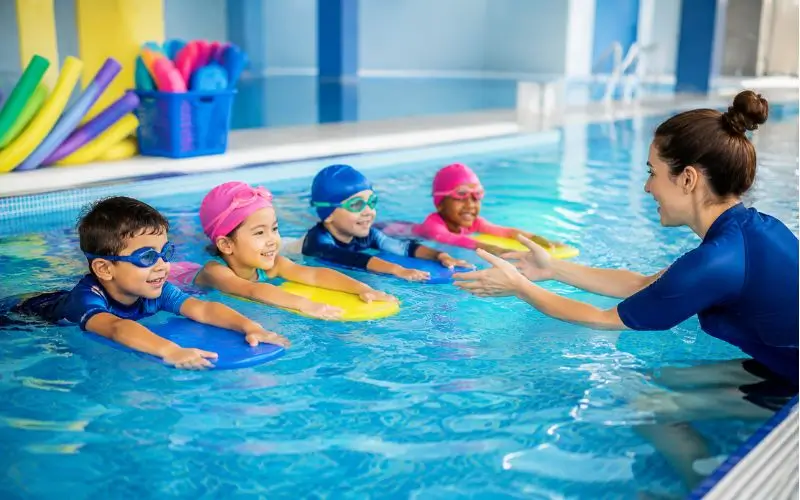
Independent lessons typically begin at around 3 ½ years of age when a child can follow a 2-step direction from the side. Class size should remain four or less. Blowing bubbles, fully immersing, jumping in and turning back to the wall will be expected, as will unaided floating on the front and back. Parents searching swimming classes for infant near me for this bracket should check the water temperature first, because a cold pool undoes six weeks of progress in one bad session.
Six to Nine Years
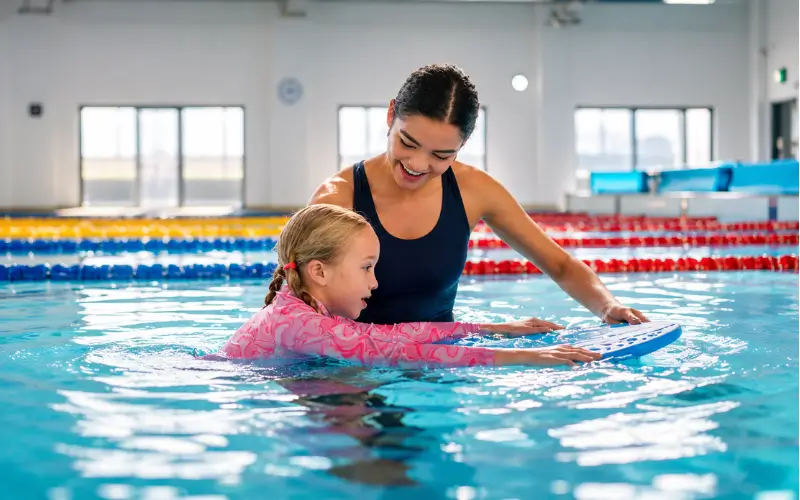
Here is where actual swimming takes place. Children in this range learn front crawl and backstroke easily, and 25 metres unaided is a reasonable goal within 2-3 terms. The group size is okay with 5 or 6. The strokes are important, but so too are the safety skills, and a good programme will include learning how to tread water and roll from front to back to breathe and getting out of the pool without the aid of the ladder. Specifically ask if they are part of the syllabus.
Ten and Above
For older beginners, it can be intimidating and embarrassing to begin late, and this is exacerbated by classes that span multiple ages. Find either a group specifically aimed at the older beginning player or a semi-private course with another individual. When looking for kids swimming lessons near me, you’ll have far better matches if you look at the level of the lessons instead of the age range of the children; a 10-year-old beginner should be matched up with the beginners.
What Water Safety Means in a Villa Community
Behind villas in many of the communities in Arabian Ranches, Springs, Jumeirah Park and many others are private pools, many of which lack a fence and a lifeguard. Change the priority order. The safety skills are before the stroke work in a child with a garden pool. Here, it is the sequence of falling in full clothes, turning, reaching, climbing to the wall, and out that saves lives. When interviewing a prospective coach, ask them if they have a session on teaching clothed rescues.
Choosing the Right Class Size
But no one speaks more highly of a ratio than when they’re younger than nine. Means one coach and four beginners isn’t too big to get meaningful contact time for each child, and 8 beginners is too many for one coach. In the absence of written confirmation, take the worst ratio that the provider has ever operated.
Booking Around the School Year
The fortnight before September and at the beginning of January are filled with term-time blocks. October means a late night on Thursday, and a group two levels above your kid. The summer camp intensive, doing 5 days a week in July and August, is very effective for children who have gotten stuck, and that’s because one day a week just doesn’t build the momentum. Some regression is to be seen on return during six-week trips, which is quite natural and will be recovered within two sessions.
Signs the Class Is Working
The progress at this age can be seen without any technical knowledge. After week 1, a child should be able to hold onto the wall, and by week 4, they should be letting go. By week 3, a child should be blowing bubbles if they would not put their face in. When there has been absolutely no change in 6 sessions, the problem is the class, not the child, and it’s time to move. Request regular verbal reports from the coach, not a certificate at the end of term which says nothing.
Classify the child to the appropriate stage, limit the size of the group, and place safety skills first, not stroke polish, when children are young.
Must Read: Complete Al Ain Traffic Department Guide – Handle Fines & Renewals Fast