



Kids Swimming Lessons in the UAE: An Age-by-Age Guide to Water Confidence
As I have observed, UAE parents ask the wrong initial question. The question is often, “Which academy?” It’s what a child of this age should be able to do in the water, not to book them into a stroke correction class, as this wastes a term and knocks their confidence and will not help them to learn to swim. The following is a quick reference of age-by-age scenarios on water safety in villas and the points that are relevant to each of these age groups.
Six Months to Two Years
This one is the parent and baby stage, and the aim is to be comfortable, not skilled. Sessions last 20 to 30 minutes, and the water should be at the appropriate temperature (32 degrees), and the parent should remain in the pool for all the whole time. Babies develop the breath-holding reflexes, floating with support on the back, and just being in water is a normal situation. There is no swimming school here. What they are learning is that it’s not scary to be submerged, and this is a great payback at four.
Three to Five Years
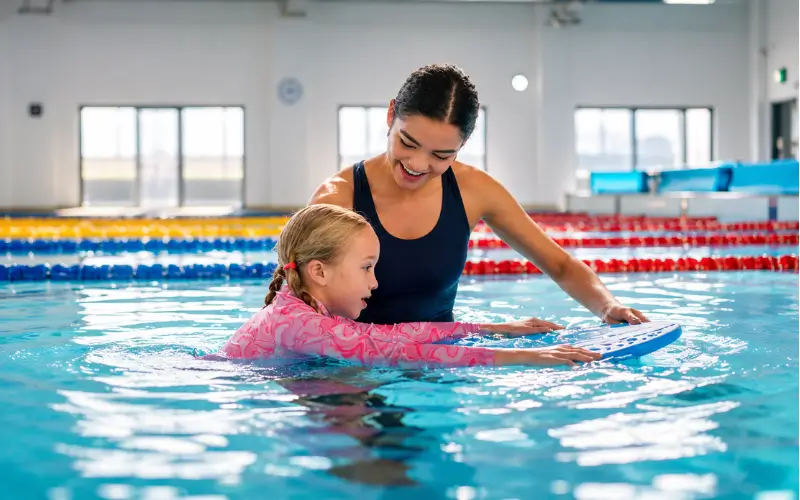
Independent lessons generally begin at about three and a half years of age when the child can follow a two-step direction from the side. Classes should be kept to four students or less. Blowing bubbles, full submersion, jumping in and turning back to the wall, and floating front and back are all to be expected. If parents are looking for swimming classes for infant near me in this range, they should always look at the temperature of the swimming pool, as one cold session will undo 6 weeks of progress.
Six to Nine Years
This is where real swimming occurs. Children in this range learn front crawl and backstroke very quickly, and 25 metres unaided is a reasonable target within 2 – 3 terms. Groups of 5 or 6 are fine here. Safety skills are as important as strokes and a good programme will teach skills such as treading water, rolling from front to back to breathe and getting out of the pool without a ladder. Specifically ask if these are part of the syllabus.
Ten and Above
Older beginners might feel they’re too late to start, and mixed-age classes do not help. Try to find an older-beginner class or a private lesson with a friend. When comparing kids swimming lessons near me by level instead of age band, you’ll have much better matches for this group, as a ten-year-old beginner is not a 10-year-old intermediate.
What Water Safety Means in a Villa Community
Many of the private pools have no fence and no lifeguard, and are located behind many villas in Arabian Ranches, Springs, Jumeirah Park and dozens of other communities. This alters the priority sequence. An individual who resides with the garden pool must have the safety skills before the stroke work. Here, life is saved by falling in full dress, turning, reaching the wall, and climbing out. Have any prospective coaches ask you if they offer a clothed rescue class.
Choosing the Right Class Size
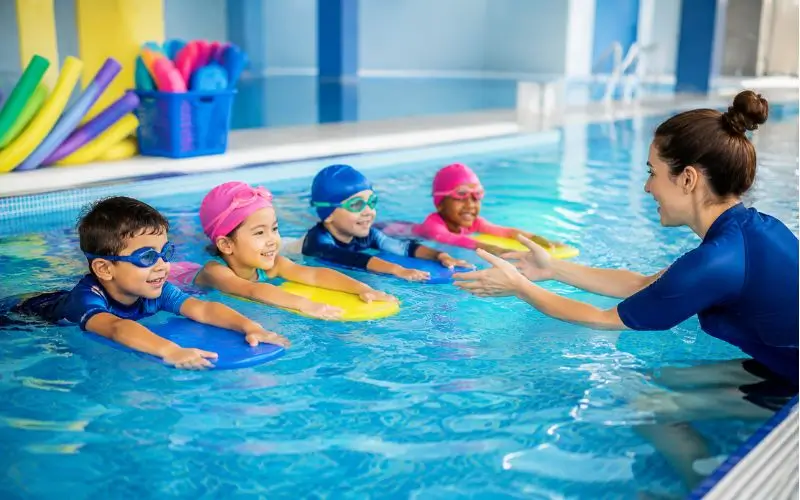
It is common knowledge that Ratio trumps reputation at any age under 9. This is meaningful contact time for each child with a 4:1 ratio and queuing with an 8:1 ratio. On the other hand, if a provider refuses to confirm the ratio in writing, assume the worst ratio that they have ever operated on.
Booking Around the School Year
The first fortnight of September and the first fortnight of early January are term time blocks. By October, you are stuck with a Thursday evening time slot no one wanted or with a group that is 2 levels above your child. Kids have stalled in their learning if they attend summer camp for 5 days of concentrated lessons per day during the summer months of July or August; it makes a huge difference that way. Some regression is to be expected on return after a six-week journey and is normal – but should recover in 2 sessions.
Signs the Class Is Working
Progress is evident at this age without any technical knowledge. A child that was holding on to the wall in week 1 should be releasing on week 4. By week three, the child should be able to produce bubbles with their face; if they do not do so by this time. After six sessions, if nothing has changed, then the problem is not the child; it’s the class, and the honest answer is that the child will move. Get a brief verbal report from the coach every couple of weeks instead of waiting to receive an end-of-term certificate with no content.
Keep group small, match class to appropriate level, and emphasize “stroke polish” over “safety skills” during childhood.
Read Also: Souq Extra Silicon Oasis