





Why Soft Skills Still Matter in an Increasingly Automated Workplace
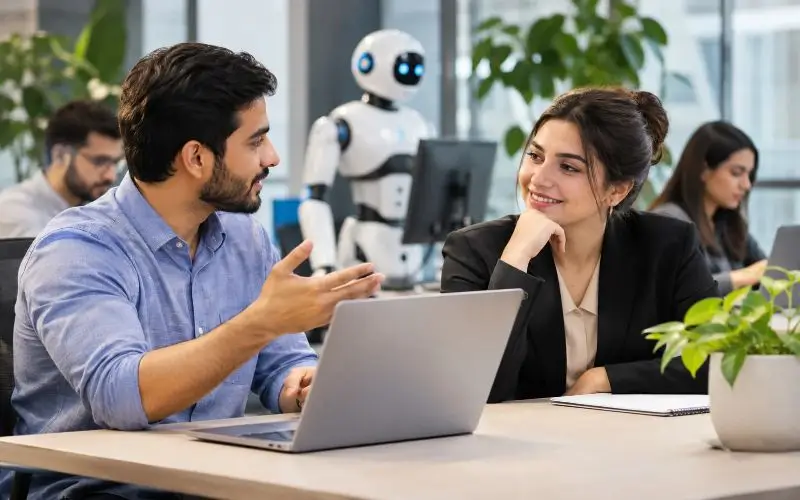
Businesses are undergoing a transformation with the help of automation and artificial intelligence (AI). However, with technology taking up more and more of the load, human skills are still valuable. The UAE Skills Index fv calculated the frequency of skills that were listed in the LinkedIn job board posts submitted between August 1 and September 29, 2026, to determine the top five most requested skills. Out of the 4,706 job postings analysed, the most requested skill was communication skills, appearing in 59.1% of the postings.
Although not every situation can be handled by the machine alone, communication, teamwork and sound judgment can help employees to deal with them. As the need for these skills continues to rise, it’s no wonder that soft-skills are still relevant in the workplace despite the use of high-tech equipment.
What Are Soft Skills?
The “soft skills” are personal and interpersonal skills that influence people’s work, interaction and communication with others. Some of these include emotional intelligence, problem-solving, leadership, teamwork and communication.
Soft skills are not job or tool specific like technical skills are but are applicable in other areas and jobs. Even if an employee is familiar with the more advanced software, they will still need to interpret their results, hear others and take criticism.
These skills are essential throughout the career. They are essential for entry-level staff to collaborate with peers and managers for effective teamwork, and they are crucial for managers to lead their teams and make decisions. In today’s fast-paced, automated work environment, soft skills in the workplace can be an area where employees add value that can’t be easily replicated by technology.
Why Soft Skills Matter as Automation Becomes More Common
AI can analyze data, perform repetitive tasks and detect patterns in vast data sets. But, it is no replacement for human judgment, empathy and meaningful communication.
Communication topped the list in 59.1% of jobs in the UAE Skills Index analysis across 11 industries. The other was teamwork at 41.7%, and leadership was third at 32.7%. 15.2% of listings used AI.
The results indicate that the employers still value human skills in spite of the increasing demand for technical skills. Staff who are able to incorporate knowledge of digital media with effective interpersonal skills may be able to assist businesses to make effective use of technology and to work effectively with colleagues.
Five Soft Skills Employees Need in Modern Workplaces
There are certain skills that are especially important, especially if the job is evolving:
- Communication: Clear communication facilitates the sharing of information, clarifying ideas and preventing misunderstandings. This is particularly important when teams are distributed geographically, or between different departments.
- Collaboration: The ability of a group of people with various skills and ideas to cooperate in order to achieve mutual objectives. It also aids the technical teams to solve problems with the help of the contributions of several specialists.
- Leadership: Good leaders give direction, lend support to their colleagues and make informed decisions. They are essential skills as the work responsibilities of employees grow.
- Problem solving: Workers must evaluate situations, brainstorm solutions and make decisions when unexpected problems arise.
- Flexibility: Respond to change: When new systems and processes are put in place at the workplace, staff are required to learn, adapt and undertake new tasks with confidence.
All of these soft skills make an employee effective in the changing technology and business.
How Soft Skills Improve Workplace Performance and Team Relationships
Interpersonal skills are very important in the functioning of teams. Clear communication between employees reduces the chance of misunderstanding and missing important information. If they pay attention, they can address issues at an early stage and prevent them from becoming more significant issues.
Teamwork also helps in the sharing of knowledge and the management of responsibilities among employees. If colleagues value differing perspectives, they are more inclined to share ideas and come up with workable solutions.
Emotional intelligence and leadership all play a role in a healthier work environment, too. Communication with employees and giving them feedback is important so that they feel a sense of trust with their managers and feel free to take responsibility for their work.
These benefits are not just on the individual level. Improved communication and collaboration can enhance employee satisfaction, prevent needless conflict, and assist organizations achieve their objectives.
How Employees and Organizations Can Develop Soft Skills
Soft skills are skills that can be learned and developed through repetition. Some of the first steps employees can take include listening more attentively to the meeting, asking questions if instructions are unclear, and asking colleagues and managers for feedback.
Communication and professional development workshops, team work and mentoring can help an organization in supporting this development. Real workplace scenarios can be very helpful as employees can practice their dealing with disagreements, presenting ideas and solving problems.
The focus of training must not be solely on technical knowledge. Companies should provide employees with chances to develop their human and digital skills together as they unlock the power of AI and automation.
A balanced development approach enables employees to be ready for a future transition in responsibilities and provides organisations with more resilient and flexible teams.
Frequently Asked Questions
What are the most important soft skills in the workplace?
Some of the most important soft skills that are important in the workplace are communication, teamwork, leadership, problem-solving and adaptability. The significance of their role and industry can differ.
Why is communication the most requested workplace skill?
Communication supports the exchange of information, coordination of work and professional relationships. UAE Skills Index revealed that 59.1% of the 4,706 job postings analysed required communication skills.
Can AI replace soft skills?
While AI can help with communication and automate various processes, there are more value-added contexts where human judgment, empathy, relationship building, and conflict resolution still play a crucial role, especially in professional settings.
Can employees develop soft skills through training?
Yes. Improving communication, teamwork and leadership skills can be achieved through workshops, mentoring, coaching, group activities and continuous feedback.
How do soft skills support career growth?
Soft skills can assist employees in working effectively with fellow workers, having leadership roles and reacting to the challenges in the workplace. These can also be useful to stand out in job interviews and career progression.
Key Takeaways
While automation will continue to transform the way people work, there will still be a critical role for human skills in their success. Technical skills are required for using new tools and interpersonal skills are required for working with others. Companies that invest in both can develop a workforce that is more equipped to meet evolving workplace needs.
Read Also: Dubai Arch Tower