





UAE–Saudi Cross-Border Logistics: A Practical Guide for Businesses Moving Goods Across the GCC
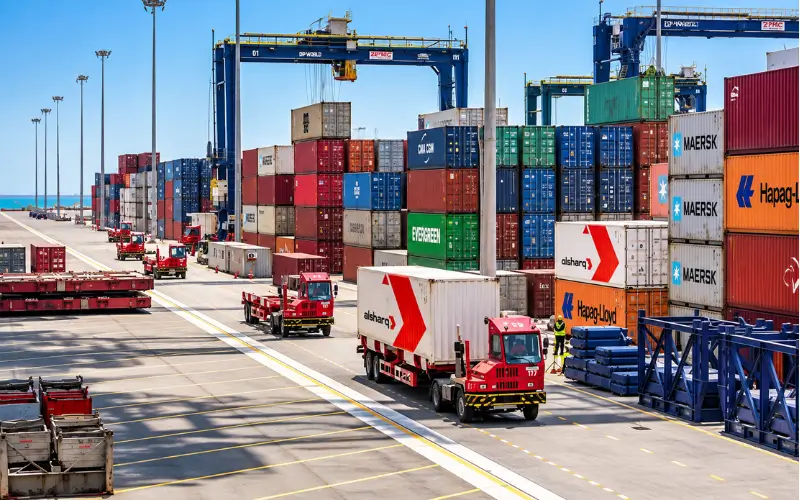
The UAE and Saudi Arabia are two of the most significant commercial markets in the Gulf and a very busy logistics corridor for companies to transport products, equipment, supplies, and other goods throughout the region.
Saudi Arabia is an important market for expansion and distribution for businesses doing business in the UAE. Meanwhile, the UAE’s ports, airports, free zones, warehouses, and well-developed logistics infrastructure position it as a key hub for goods moving to and from the rest of the GCC.
However, arranging for the transport of goods between the two countries is not enough. Before goods are sent from the warehouse, companies must take into account the nature of their goods, documents, customs procedures, packaging, transportation costs, and delivery requirements.
An effective logistics operation can help companies minimize unnecessary delays and smooth out their cross-border logistics.
Why the UAE–Saudi Trade Corridor Matters
The UAE has emerged as one of the key trade hubs in the region, bringing together manufacturers and suppliers from Asia, Europe, Africa, and other global markets and customers from the Middle East.
All goods in transit from any of the port and airport entry points of the UAE can be stored, processed, consolidated, or redistributed before being shipped to the other GCC markets.
Many of these shipments are destined for Saudi Arabia, where there is a large local market.
This drives logistics demand from many sectors such as retail, automotive, construction, manufacturing, e-commerce and electronics, furniture, machinery and general trading.
Entering the Saudi market, companies should consequently consider logistics as a part of their expansion plan, not shipping as a standalone operation.
Road Freight Plays a Major Role
Road transport is the key mode for cross-border trade in the UAE, given the direct land link with Saudi Arabia.
There is a range of vehicle and freight options depending on the shipment.
Some dedicated trucks might be needed for large orders, or small orders can be grouped together with other loads. Depending on the goods’ size, weight, temperature, or physical properties, special vehicles may be required.
Road freight services can also be flexible if businesses need to take deliveries from a warehouse in the UAE and drop them off at a particular depot in Saudi Arabia.
But for an effective road freight, there needs to be coordination.
The journey includes pick-up times, loading of goods, documentation, border crossing, customs clearance and delivery. The overall delivery schedule can be impacted by a delay at any stage.
Choosing Between Road, Air, and Sea Freight
While road transport might be significant on this specific route, it’s not necessarily the best option for every shipment.
Speed, which can have a significant commercial value, is a factor where air freight may be helpful. Air transportation may be the right option for urgent spare parts, samples, valuable goods or products that need to be delivered on a specific date.
For certain high volume shipments or containerized goods, however, it may be possible to take sea freight as an option rather, where the supply chain is already linked to the port.
So instead of the most expensive or fastest option, businesses should ask themselves, “Which transportation option is the most suitable option for this shipment?”
The volume, weight, urgency, value, origin, destination, handling requirements and budget should all be taken into account.
Documentation Should Be Prepared Before Dispatch
One area in which much can be done to prepare in advance is in the documentation.
A commercial invoice, packing list, certificate of origin, transportation documents, and other supporting documents may be required for commercial shipments. Some product lines may also need to be certified, permitted, registered or approved.
Specifications vary depending on the commodities being shipped and the import regulations.
It is for this reason that businesses should check the requirements beforehand before sending the goods and not after the goods are at a border or customs office.
Correctness is also critical.
Product descriptions, quantities, values, country of origin and other shipment information should be well documented. Discrepancies may cause extra queries in the clearance procedure.
Customs Is Part of the Logistics Strategy
Customs clearance is perceived as a bureaucratic procedure, which is done towards the end of transportation planning. But in reality, it should be taken into consideration much sooner.
Businesses should be aware of the classification of their products, documentation needs, any particular approvals that may be required and any costs that may be incurred on importation.
Especially for companies shipping goods for the first time to Saudi Arabia.
By examining the options for UAE to Saudi Arabia cargo shipping and the logistics process before shipping, businesses can better prepare for their transportation and documentation needs.
This preparation is more critical when the goods can include more than one category of product or where the goods may be subject to further requirements by regulations.
Packaging Is a Logistics Decision
Packaging is generally considered just as a protective measure, but it may influence the transportation efficiency or cost.
Commercial products can go through warehouses, loading points, trucks, customs centres and delivery points before they make it to the final customer.
Packaging should, therefore, be appropriate to the entire journey.
Weaker packages can be needed for fragile goods and reinforced outer packaging may be necessary. If the products are heavy, pallets or other special securing techniques may be required. Protection of furniture and finished surfaces from impact and scratching may be required.
Meanwhile, the needless packaging can enlarge the size of delivery.
Freight pricing may be based on weight or volume, so businesses should try to keep cost to a minimum while ensuring the packaging offers enough protection without becoming too large for shipping.
Understanding the Full Cost of Shipping
When companies are looking for freight quotes, they should consider more than just the advertised amount for transportation.
Collection, packing/loading, freight charges, customs services, storage, special handling and delivery to final destination are elements that may be part of the final logistics cost.
The characteristics of the shipped items also have an impact.
A small commercial vehicle carrying goods from Dubai to Riyadh will be different to heavy machinery being moved from Abu Dhabi to a project site in another part of Saudi Arabia.
Properly detailing information when asking for a quote helps logistics providers to accurately calculate their costs.
Information that is useful is: Type of cargo, quantity of packages, size, total weight, collection address, destination, special handling.
Building a More Predictable Supply Chain
For companies shipping occasionally, each movement can be managed as an individual project. However, for businesses operating on a frequent basis between the UAE and Saudi Arabia, it would be advantageous to create a more uniform process.
This could encompass uniform documentation formats, packaging regulations, delivery timelines, internal review and approval workflows, and well-defined roles between suppliers, logistics partners, and customers.
Having a history of past shipments can also enable companies to detect any patterns of delays or unnecessary costs.
These enhancements can help reduce the unpredictability of transportation over time, and help companies plan when inventory and customer deliveries can be made.
Logistics as Part of GCC Business Growth
Going global into another market in the Gulf is not just about finding customers.
There is also a need for the business to have an operational system that can reliably transport products across borders.
Transportation planning, customs preparation, documentation, packaging and delivery should be regarded as sequential steps, all of which form a part of the same process for companies engaged in trade between the UAE and Saudi Arabia.
The best logistics decision is generally made before the cargo begins to move.
Knowing the requirements of shipments from the beginning, and choosing the right mode of transport for the actual product, companies can create a more efficient cross-border operation to aid in sustainable growth in the GCC.
Read Also: What Tourists Should Know About Buying Cigarettes in Dubai