





Important Things to Remember When Buying a Tennis Racket
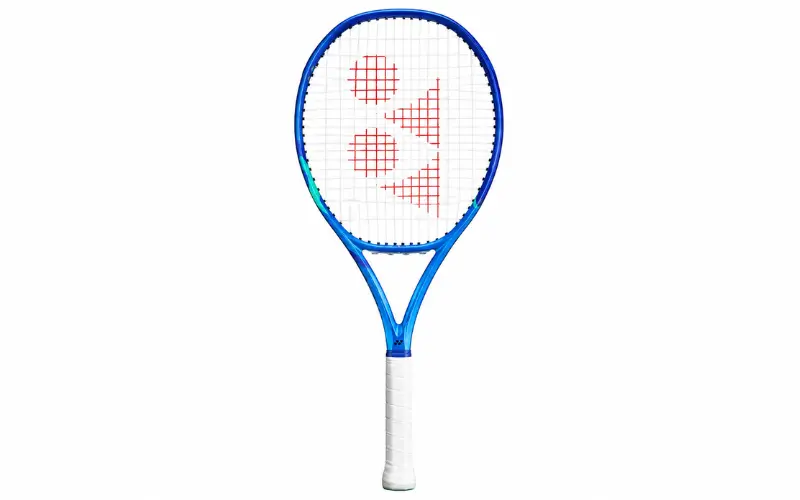
In a tennis shop, you might see tennis rackets that look almost identical but have different weights, head sizes, grip sizes, and string patterns. Then there are terms such as head-light, head-heavy, swing weight, and beam width.
So, which one should you actually buy?
The answer starts with your game, not the racket’s marketing. A tennis racket that’s too heavy can slow down your swing and make quick preparation harder. One that’s too light may be easier to move but can feel less stable when you’re facing a faster ball. The United States Tennis Association (USTA) recommends that racket variables such as head size, frame mass, and grip size involve practical trade-offs rather than one specification being universally best.
That’s why buying from a specialist tennis retailer can be useful. Here is expert guidance, helping players compare options according to how and where they actually play.
1. Start With Your Playing Level
Your current playing ability should be the first filter when choosing a racket.
A beginner, a recreational player, and an experienced club competitor don’t necessarily need the same type of frame.
For example, imagine a new player who struggles to generate racket-head speed. Giving them a heavy, control-focused racket because it looks “professional” probably won’t help. They may spend the match fighting the racket instead of learning their strokes.
Your current game should determine the racket you buy.
2. Get the Racket Weight Right
Here’s the balance you’re looking for: a racket heavy enough to feel steady on court, but light enough that you can swing it over and over without your technique falling apart by the third set.
Lighter tennis rackets are usually easier to whip around. They suit beginners and, honestly, a lot of experienced players who just prefer a faster swing too. The catch? They can feel a bit shaky once the ball starts coming in hot. There’s always a trade-off somewhere.
Heavier tennis rackets put more mass behind the ball and can provide greater stability, but they also demand more from the player.
USTA’s racket-selection guidance suggests that greater frame mass can increase ball speed when other factors remain equal, while also helping stabilise the racket on off-center impacts.
Here’s a useful question to ask when testing one:
Can I swing this racket comfortably for an entire hitting session, not just five minutes?
That’s far more useful than simply asking whether you can lift it.
3. Check Head Size
A larger racket head generally gives you more forgiveness, while a smaller head tends to favour precision.
The head is the area containing the strings, and its size affects the size of the effective hitting area.
Larger head sizes
They can offer:
- A larger sweet spot
- More forgiveness on off-centre contact
- Easier access to power
- A little more margin for developing players
Smaller head sizes
They tend to suit players who:
- Strike the ball consistently
- Want a more precise response
- Have developed racket control
- Prefer a control-oriented setup
The USTA describes larger heads as providing a larger sweet spot and greater resistance to twisting on off-centre impacts.
If you’re regularly catching the ball close to the frame, a little extra forgiveness can make a noticeable difference.
4. Don’t Ignore Grip Size
The right grip should feel secure without making you squeeze the handle too hard.
This is one of those details that’s easy to overlook when you’re excited about a new racket.
A grip that’s too large can make handling more difficult and encourage excessive squeezing. A grip that’s too small can also require extra effort from the hand and forearm.
If you’re unsure, check the manufacturer’s grip-size guide and, ideally, hold the racket before buying.
There’s another practical point for players in hot climates: sweat can make a grip slippery. An overgrip can help absorb moisture and improve the feel in your hand.
5. Understand Racket Balance
Weight tells you how heavy a racket is. Balance tells you where that weight is distributed.
That’s why two tennis rackets with identical listed weights can feel surprisingly different.
Head-light
A head-light racket can feel quicker through the air and may appeal to players who value
- Fast racket preparation
- Manoeuvrability
- Quick reactions at the net
Even-balance
This is somewhere between the extremes and can be useful to find a compromise between handling and stability.
Head-heavy
There is more weight placed at the head of the racket. Can help with stability and power, but may feel slower with quick exchanges.
Do not judge a racket by its weight. Carry it and swing it.
6. Pick the String Pattern Carefully
The tension of the string affects the feel and reaction of the racket to the ball.
The most frequent patterns are 16 x 19 and 18 x 20.
A more open pattern, like 16 x 19, will give more freedom of movement for the strings and may help players to create more spin. A denser pattern (18 x 20 usually) yields a more controlled, stiffer reaction.
But neither of these is inherently superior.
An open pattern might be better if you use topspin frequently from the baseline. A tighter pattern might be more attractive if you are more into directional control and prefer less flat shots.
That is why the choice of racket and string is a specialty of the old-timers.
7. Think About Your Playing Style
The racket should not require you to alter your playing style.
Baseline player
Seek balance, spin and controlled power.
Aggressive all-court player
Perhaps a more balanced, versatile racket with a nice mix of manoeuvrability, power and control is the better option.
Serve-and-volley or net player
Quick handling is particularly helpful when responding to through play and playing volley balls quickly.
Beginner
Advanced control characteristics should be implemented after the forgiveness and comfortable handling characteristics.
If you are not familiar with your playing style, don’t worry; it’s okay. If so, avoid a challenging racket to limit your growth, and opt for a flexible racket instead.
8. Consider the Court Surface and Playing Environment
Playing environment is important, but it shouldn’t be the only determinant in a racket decision.
A player who typically skips around on hard surfaces may prefer a consistent and solid combination, one that will perform well on hard, low-bounce surfaces. But that’s a different case for a clay-court player. If you focus on long rallies and heavy topspin, your focus will probably change.
When it comes to outdoor training in the UAE, there’s another factor to consider: the heat. It’s a little, but not so little. Sweat alters the feel of a grip in your hand, sometimes in a single set, and playing frequently will cause your strings and grips to wear out quicker than you’d think. Be careful of both, or else you’ll see the difference halfway through the game.
The racket is not as court-specific as tennis shoes. Playing style & physical comfort should still be a greater factor in the decision.
A Simple Tennis Racket Buying Checklist
Spend a few minutes going through the following ten questions before ordering:
- What is my current rating?
- How much weight can I lift?
- What size head do I need for a balance of forgiveness and control?
- Is the grip size comfortable?
- Is the racket head-light, balanced, or head-heavy?
- Is my playing style compatible with the string pattern?
- Do I play mostly from the baseline, all over the court, or at the net?
- Do I need to use a new string/tension?
- May I try it or demo the racket before purchase?
- Am I purchasing from a specialist Tennis dealer that can assist me with comparing specifications?
When you are considering alternative rackets and don’t know where to begin, make sure you check out TennisShop.ae. They keep it simple: Your level, your preferences, and what your game actually needs – and you aren’t left wondering.
Conclusion
A decent tennis racket should not induce thoughts on the racket every time you hit the ball. It should feel as if it were a natural part of your swing.
Which is why the best value for money isn’t always the smallest, the heaviest, the highest or the most popular option. This is the frame that is comfortable for you, your swing, and how you really play.
When you don’t know exactly what you’re purchasing, you can find yourself with a costly racket that is in your bag more than on the court. TennisShop.ae is a specialist tennis website dedicated to high-level advice and quality tennis rackets for sale, providing players with a way to compare tennis rackets with their own playing requirements.
Must Read: Souq Extra Silicon Oasis: Stores, Location, Timings, Facilities & Visitor Information