





9 Eye Symptoms That Should Not Be Ignored and When to See a Specialist
How many times, have people ignored slight changes in their vision, and thought that it will just go away if they get some rest?
Difficulty seeing clearly, some discomfort in the eye or changes in vision may seem unimportant. Some eye symptoms can, however, be a sign of underlying medical conditions that need professional intervention.
Eye diseases can impact anyone at any age. Some symptoms are caused by temporary irritation or digital eye strain, while others can be related to cataracts, glaucoma, retinal disorders or inflammation. The awareness of the difference can help to avoid unnecessary delays in diagnosis and treatment.
It is also essential to recognize the signs, causes, and when to see an ophthalmologist about eye problems.
1. Sudden or Unexplained Vision Loss
Sudden loss of vision is one of the most critical eye symptoms, and should be treated immediately. It can happen in either one or both eyes, and can manifest as complete blindness, a dark space, or a sudden decrease in the clarity of vision.
Sudden loss of vision can result from a number of conditions such as blockage of the retinal artery, retinal detachment, optic nerve problems, or conditions that affect the blood vessels or nerves.
Sudden changes in vision can be a medical emergency, unlike gradual changes in vision. Depending on the cause, the risk for permanent visual damage may increase with delaying evaluation.
Even if the vision is only temporary (and subsides within minutes), it should not be ignored. These can occasionally be signs of a temporary blockage of blood flow and should be assessed immediately.
When to see a specialist: Any sudden loss of vision requires emergency medical evaluation, even when the condition is painless or vision returns.
2. Persistent Blurred Vision
Many people experience blurriness when using the computer, mobile phones or another digital display for several hours. While eye strain may cause temporary discomfort in vision, continued blurriness could suggest another issue.
Common causes include refractive errors, dry eye disease, cataract or fluctuations in blood glucose levels. Certain conditions of the retina can also cause loss of clarity in vision.
For instance, a person with cataracts has a cloudy natural lens in the eye. This typically results in vision becoming blurred and activities like reading, driving or seeing things at a distance becoming more challenging.
It does not automatically mean that people are getting older or spending more time in front of a screen as they grow older if they have persistent blurry vision.If someone has persistent blurry vision, this is not necessarily a sign of ageing or more time in front of a screen. A thorough evaluation may be useful in determining its cause and treatment.
When to see a specialist: Blurriness that continues, worsens, or interferes with daily activities warrants an eye examination. Sudden blurred vision, particularly with other neurological symptoms, requires emergency assessment.
3. Frequent Eye Pain or Discomfort
Dryness, allergies or environmental irritation can lead to occasional discomfort or irritation of the eye. But when these pains occur again and again, or persist for more than a day or two, they should be investigated further, particularly if they are accompanied by redness in the eye and/or vision changes.
Eye pain can occur with eye injuries, infections, inflammation and some types of glaucoma. Sometimes, discomfort can also occur in conjunction with contact lens complications.
Examination can be helpful in determining the type of pain and its severity. Sharp pain, pressure pain, and burning pain may be due to different causes.
A specialist eye clinic abu dhabi can offer a specialist assessment for other eye problems that can affect the cornea, retina, and other parts of the eye for those who have recurring symptoms.
When to see a specialist: Persistent pain should be assessed promptly. Severe eye pain, particularly with nausea, redness, or sudden vision changes, requires emergency care.
4. Sudden Flashes of Light or New Floaters
Floaters are usually seen as small spots, threads or moving shapes in the field of vision. These are usually linked to changes in the gel in the eye (vitreous) that occur due to aging.
If they are present for a long time they may not signify anything, but a sudden appearance of many or a sudden surge in the number of floaters can sometimes be a sign of a retinal tear or detachment.
The vitreous can tug on the retina causing flashes of light. These flashes may come as a quick succession of streaks or flares, especially at the periphery of the visual field.
Retinal detachment is when the retina pulls away from the material underneath it. If left untreated, it can cause loss of vision.
When to see a specialist: A sudden shower of floaters, new flashes, or either symptom accompanied by a shadow across vision requires immediate assessment by an eye specialist or emergency department.
5. Double Vision
Diplopia is the medical term for seeing double vision. Images can be placed next to each other, on top of each other or partially over one another.
Double vision may occur for several reasons, including eye muscle problems, nerve issues or problems with eye movement. Some neurologic diseases can also impact the nerves that control eye alignment.
One important difference is that of double vision in one eye versus double vision that goes away when the eye is closed. This information can be helpful in identifying potential causes.
Some people have double vision from time to time and others all the time. Unusual double vision, no matter how common, should be investigated, not taken for granted as just a symptom of fatigue.
When to see a specialist: New double vision requires prompt medical assessment. Sudden double vision accompanied by weakness, difficulty speaking, severe headache, or loss of balance requires emergency care.
6. Persistent Eye Redness or Irritation
Red eyes are often caused by allergies, dryness, lack of sleep or conjunctivitis. If the redness persists or is accompanied by other symptoms, however, it could be a sign of a medical condition that needs treatment.
These may be due to infection of the cornea, inflammation within the eye, or eye surface trauma.
If redness does not have a known cause, patients wearing contact lenses should pay special attention. The risk of the infection of the cornea is high if contaminated lenses are worn or if lenses not recommended for overnight use are worn while sleeping.
The combination of redness, pain, sensitivity to light, or reduced vision is more concerning than mild redness alone.
A medical examination helps determine the cause and prevents inappropriate treatment. Some medicines for the eyes, for instance, may aggravate certain infections if they are not used as directed by a qualified physician.
When to see a specialist: Redness that persists or worsens should be evaluated. Redness with significant pain, light sensitivity, or reduced vision requires urgent assessment.
7. Gradual Loss of Peripheral Vision
The use of peripheral vision enables people to see things outside of their direct line of sight and to perceive motion. Enables walk, drive and move safely in new environments.
Slowly worsening side vision may be related to a group of eye diseases called glaucoma, which can destroy the optic nerve.
A problem with glaucoma is that early signs are not always apparent. As the disease continues to advance, peripheral vision can be lost before central vision is impaired.
This gradual process can cause the affected person to not realize that there is a problem until there is significant damage.
Some individuals who are at higher risk due to a family history of glaucoma, some medical conditions or other known risk factors may need more frequent eye exams.
When to see a specialist: Gradual changes in side vision need professional assessment. Sudden loss of peripheral vision requires emergency evaluation.
8. Increased Sensitivity to Light
Photophobia (light sensitivity) is an increase in light sensitivity or discomfort or pain from normal lighting. A few people have symptoms in the outdoors, others have problems with indoor lights, and others have problems with digital screens.
Dry eyes or migraine headaches may happen from time to time. Persistent and/or severe sensitivity can however be a sign of inflammation, corneal issues, or other eye disorders.
One of these conditions is called uveitis, which is inflammation inside the eye and can lead to symptoms of pain, inflammation, light sensitivity, and blurred vision.
Light sensitivity should not be viewed as a standalone issue, but rather in conjunction with other symptoms. The length of time, intensity and vision changes associated with it can aid in deciding when it is an emergency.
When to see a specialist: Persistent or unexplained light sensitivity deserves assessment, particularly when accompanied by redness or discomfort. Severe light sensitivity with pain or reduced vision requires urgent care.
9. Dark Spots, Shadows, or a Curtain Across Vision
If the loss of sight is in one of the visual fields and is of a dark patch or shadow, a serious eye disease may be present.
A fixed dark area is different to normal floaters, which usually wander across the field of vision, and can be a sign of a problem in the retina or the visual pathway. The shadow that looks like a curtain moving across the field of vision is especially concerning in the case of retinal detachment.
Other vision diseases may also result in missing sections of your vision. Macular diseases, for instance, can make it hard to recognise faces, read small text or see fine details.
Any sudden or missing vision should not be considered a normal change in vision.
When to see a specialist: A new curtain-like shadow, sudden blind spot, or rapid loss of part of the visual field requires immediate emergency evaluation.
When Is a Routine Eye Examination Not Enough?
Regular eye exams can help detect refractive errors and the need for glasses or contacts. They are not, however, always able to give all the information required to diagnose complex eye diseases.
A doctor of ophthalmology can use special tests to determine the condition of the retina, optic nerve, cornea and more.
For example, someone with chronic blurriness could need more than a new pair of glasses. Other tests can detect cataracts, retinal changes and glaucoma-related damage.
A specialist evaluation may be beneficial for patients with diabetes, those with a family history of inherited eye disease, or those who continue to have unexplained symptoms.
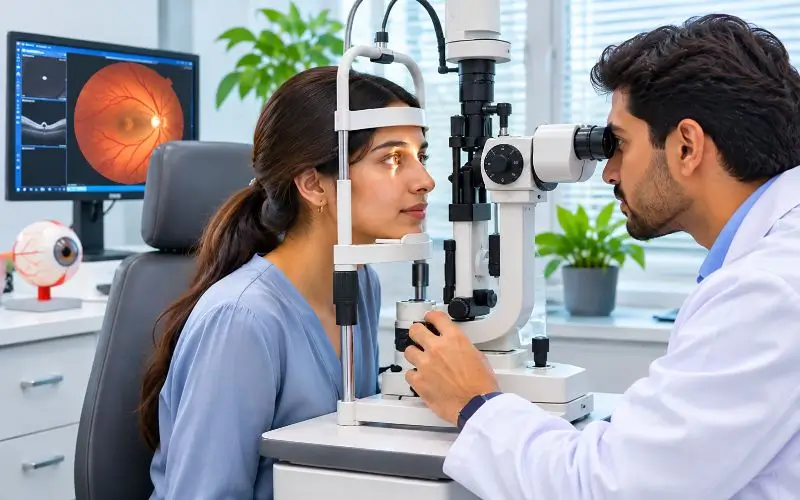
Depending on the condition that is suspected, an examination may involve pupil dilation, measurement of eye pressure, visual field testing, or retinal imaging.
Rather than a standard approach for all patients, the appropriate examination will be based on the clinical findings, medical history and symptoms.
How Do Eye Specialists Diagnose Complex Vision Problems?
To help you determine the health of your eyes and investigate issues that may not be obvious in an eye exam, modern ophthalmology has a number of diagnostic tools.
In general, a thorough exam starts with questions regarding symptoms, past diseases, drugs, and family history. The ophthalmologist can then examine the clarity of the eye, eye movements, pupil reaction and internal eye structures.
Specialised tests may be performed when necessary for further information.
One example is optical coherence tomography (OCT), which can be used to create detailed images of retinal structures. Visual field testing can determine if there are gaps in vision, and tonometry can measure intraocular pressure.
Patients requiring specialised assessment may consider established medical centres such as cleveland clinic abu dhabi, whose ophthalmology department provides services for cataracts, glaucoma, retinal diseases, corneal disorders, and other complex eye conditions.
Early detection of a condition can aid the efforts of a medical practitioner to recommend appropriate treatment and track changes over time. Treatment outcome varies, however, depending on diagnosis, severity and individual circumstances.
How Can Regular Eye Examinations Help Protect Long-Term Vision?
Not all serious eye diseases develop with symptoms during the early stages. Certain diseases are chronic and regular check-ups are crucial to prevention.
Glaucoma can cause an increasing loss of vision without first being noticed by the person. Diabetic retinopathy, like any other condition, may also start without any sign or symptoms at all.
Ongoing eye exams can help detect these conditions and ensure that they are treated on time, if needed.
This is dependent on factors like your age, family history, eye conditions you may have, diabetes, and previous eye exam results.
Good daily practices can also help with the comfort of your eyes and overall health and wellness. Regular screen breaks, wearing proper eye protection, controlling chronic health issues and adhering to treatment plans can all help keep your eyes healthy.
Conclusion
Do not use the symptoms of the eye alone to make a diagnosis of the severity or discomfort of the eye. There are some serious conditions that slowly develop without pain and some that give sudden warning signs to seek immediate medical attention.
If vision remains blurred, discomfort recurs, there is unexplained redness or vision problems in the peripheral vision, seek professional evaluation. Emergency evaluation should be made if vision loss occurs suddenly, new flashes with floaters or if there are curtains-like shadows.
By knowing the signs, people may be able to identify the need to seek specialist advice. When used in conjunction with the right eye exams and prompt treatment, early diagnosis is a key element in the preservation of vision and overall eye health.
Read Also: Life Care Hospital Musaffah