


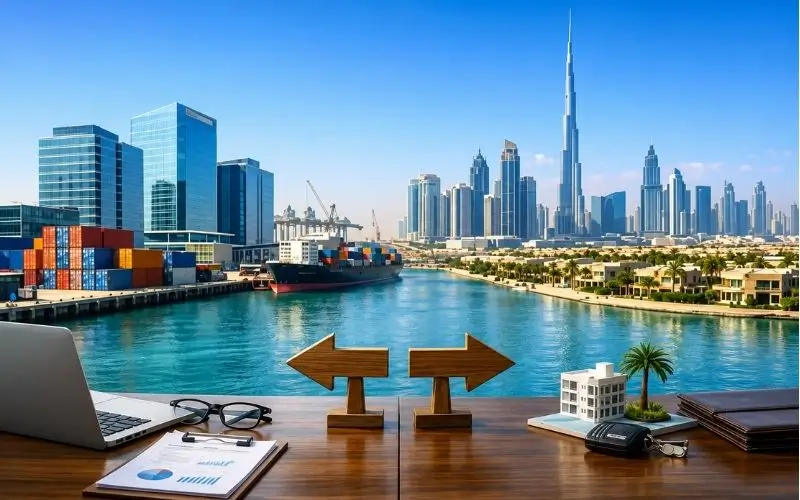

Dubai Travel Guide for First-Time Visitors: Places, Transport & Tips
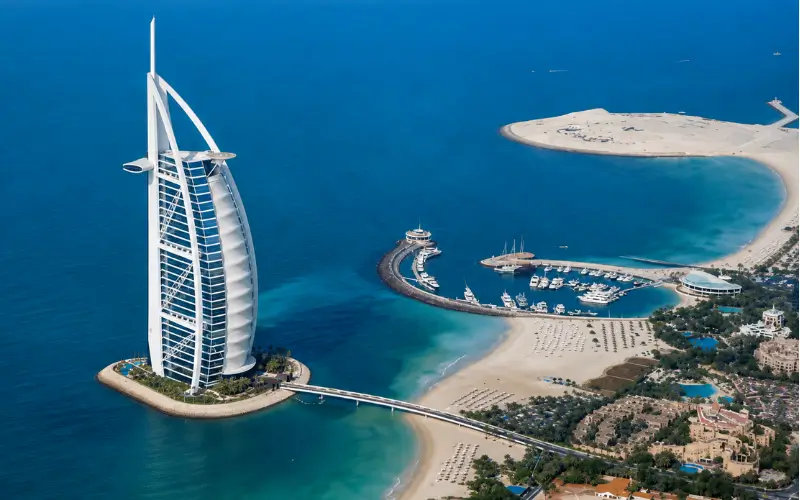
Dubai is one of the UAE’s most popular cities and is famous for its modern architecture, beaches, shopping centres, cultural centres, entertainment and desert activities. First-timers, however, should be prepared to get lost when planning their Dubai holiday as the city is laid out in several neighbourhoods and it may not be possible to travel from one to the next most effectively by the same method.
This Dubai Travel Guide is a compilation of the most useful information to help you plan the trip to Dubai for the first time. It provides information on what and where to eat, how to get around, where to stay, the weather, public transportation, shopping, and local customs and tips on how to fit everything in without trying to see too much at once.
Is Dubai Good for First-Time Visitors?
Dubai is highly appropriate for first-timers as it has a well-established tourism infrastructure and official information regarding accommodation, attractions, transportation, weather, currency, safety, and local etiquette. There are also a variety of different types of experiences available to choose from, from the contemporary landmarks, huge shopping malls, and historic neighbourhoods, beaches, and desert experiences.
The problem is typically that you have far more things to do than you can get done. Dubai is loaded with attractions and experiences, so it is better to plan your trip by location and interest. Some attractions are conveniently found in one section of the city while others are further away.
Therefore, the location of your hotel, your daily plans, and how you will get there should be taken into account.
Best Time to Visit Dubai

Dubai’s climate is a hot desert climate, which greatly influences outdoor sightseeing. However, the official Dubai tourism website offers separate information about the weather in Dubai and suggests taking the weather into account while planning their activities.
Outdoor sightseeing, walking, beaches, and desert activities are more comfortable during the cooler portions of the year. In the summer months, people might prefer the inside of the park, shopping malls, and activities that have air conditioning.
It isn’t to say that the summer visitors can’t enjoy Dubai, though. The city has a lot of indoor entertainment and shopping options. It doesn’t mean that outdoor activities should be completely avoided, but that more care must be taken with regard to timing, hydration, and exposure to heat.
If your primary objective is to spend extended periods of time outdoors, check the forecast before planning each day, and don’t rely solely on a general description of the season.
How to Get Around Dubai
One of the most crucial aspects of planning a trip to Dubai is transportation. Visitors can use a dedicated area of the official tourism authority to get information on travelling around Dubai; the city has Metro, public buses, tram, taxis and other modes of transport.
This will be determined by your location. When you are starting from near stations and going to near stations, then the Metro can be very helpful. Not all locations are directly connected to the Metro; in these cases, taxis are more convenient. Buses can be used to reach beyond Metro stations in the public transport system.
Visitors are not required to select a single mode of transport for their entire journey but can mix it up as per their daily plans.
Dubai Metro
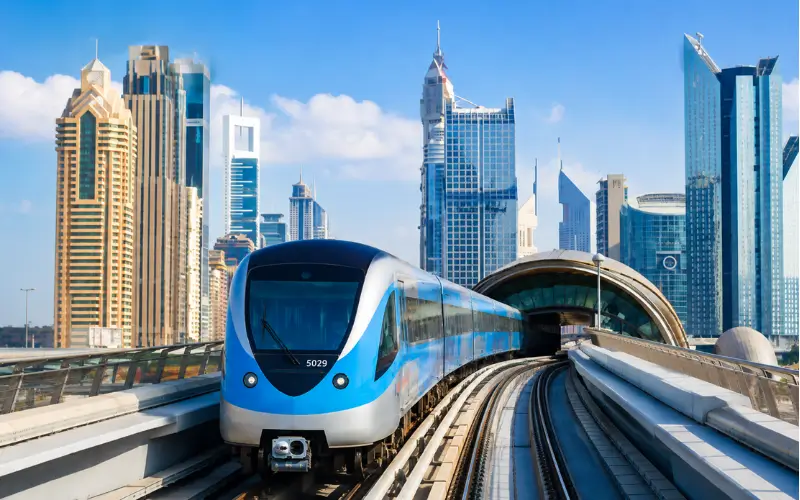
Dubai Metro is especially helpful when traveling to destinations linked with the Metro. Along with the buses and tram service, the system is part of a comprehensive public transportation system in Dubai.
RTA currently has seven zones of transportation in Dubai. Fares are dependent on the number of zones traveled, and transfers between various modes of public transit may count as part of a single trip when the appropriate transfer rules are met.
The nol card is a crucial component of Dubai’s public transport system for passengers who make frequent use of the city’s buses and trains. According to RTA, the nol cards will be accepted for all modes of the Metro, buses, tram and marine transportation, and for some other services, such as paid parking.
Current Standard fares as per RTA are AED 3 for a Silver/Personal card journey within a zone, AED 5 for travel across two adjacent zones, and AED 7.50 for travel across a longer distance (> 2 zones). The AED for gold fares is AED 6, AED 10, and AED 15, respectively. A regular nol Red Ticket has a cost of AED 4, AED 6, or AED 8.50 for the same zone categories.
Fares and transport arrangements are subject to change: please check the latest RTA information before travelling.
Dubai Taxis
If there isn’t a Metro station near a destination or if you are travelling with luggage, taxis can be useful. They’re also convenient for groups seeking door-to-door transportation.
A good plan for travelers is to take advantage of public transportation where it is available and a taxi when it is necessary to save a lot of walking or save considerable time.
What Is the Nol Card?
The nol card is Dubai’s public transport payment card. According to RTA, it can be applied to Metro, buses, tram, and marine transport as well as to paid parking at RTA.
There are various nol products available for different users. The Silver Card is the standard card, and Gold gives access to Gold Class cabins on Metro and Tram, at the higher applicable fare. The Red Ticket is also available as a single-use ticket for trips at RTA.
If tourists are planning on using public transport multiple times in their trip, knowing about the nol system before they depart can make getting from one place to another much easier.
Where Should You Stay in Dubai?
For all visitors, there is no one ideal site. The location will be determined by your budget, attractions, lifestyle, and transportation requirements.
For those seeking proximity to modern landmarks and the heart of the city, Dubai Downtown is a good option. Dubai Marina and JBR are appealing destinations for any traveller who would prefer waterfront surroundings, restaurants, and beach access. The other area is Deira and Bur Dubai, which have more of a connection with the older Dubai and traditional markets.
Another popular place that visitors will find beaches, restaurants, and a high-end residential community is Jumeirah.
The most crucial tip is to ensure that you check the attractions that you plan to visit before choosing a hotel. This doesn’t necessarily mean it is a cheaper rate, but it just means that if you need to make long trips each day to get to where you want to go, you will find that room to be less convenient.
Top Places to Visit in Dubai
While Dubai is a place for travelers of many kinds, you should also include items on your list based on your interests, not just a ranking.
Downtown Dubai is one of the most familiar areas of Dubai, and features some of the city’s top attractions around Burj Khalifa and the Dubai Mall. Dubai Marina offers a modern waterfront experience while JBR offers a beach, restaurants, shops and leisure activities.
Dubai Creek, Deira and Bur Dubai give other parts of the city the chance to experience the more traditional side of the city. Dubai’s official tourism resources also emphasize the importance of neighborhood culture and traditional experiences in exploring the city.
Other experiences can be beach, desert activities, museums, cultural attractions, and family entertainment. The most preferred itinerary is dependent on the time period and the travel season.
Bur Dubai and Old Dubai
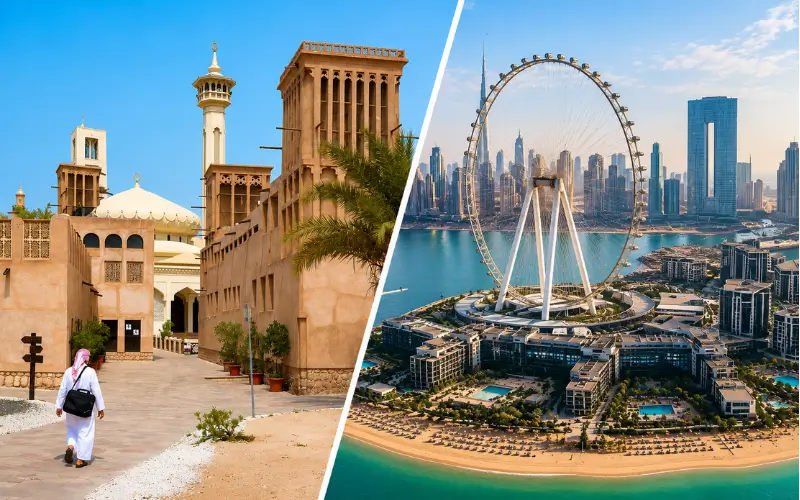
Bur Dubai is good for visitors who wish to discover old Dubai. The area offers access to historic and cultural sites and is near Dubai Creek.
For those looking for traditional markets and local history, and the older Dubai, a day trip in Bur Dubai and nearby Deira can be an enjoyable experience.
Dubai Marina and JBR
Dubai Marina is famous for its waterfront location, tall buildings, restaurants and recreation. Adjacent JBR offers beach access and a busy pedestrian zone.
This section of Dubai may find its best use during the day and evening as it allows visitors to enjoy sightseeing, eating and relaxing by the water.
Downtown Dubai
One of the primary places to experience is downtown. The Burj Khalifa and Dubai Mall make the area easy to put in a travel itinerary, while the area surrounding the district has restaurants, hotels, and entertainment.
It makes sense to spend the time here rather than a quick photo stop Downtown.
Dubai Shopping Guide

Purchasing is an integral part of Dubai’s visitor experience. The city has large modern malls and traditional souks and markets. The Dubai tourist office offers information on both modern and traditional shopping areas, and shopping is part of the main tourist attractions of the city.
Among the most popular places to stay when visiting Dubai to enjoy shopping, entertainment, and nearby Downtown Dubai activities is the Dubai Mall.
If you want a more traditional experience, then markets in places like Deira and Bur Dubai will offer a more local feeling. You can also wander through markets and souks, and discover the old city areas.
When shopping is a major part of your visit, it may be wise to stay in a location that has good transportation links to other malls rather than to the hotel itself.
What Currency Is Used in Dubai?
The official currency of Dubai is the United Arab Emirates dirham (AED). Official Dubai tourism information gives guidance on dirham, exchange rates, and travel information related to payment.
An old exchange-rate figure from a different travel article should not be used as a reference for visitors, as the exchange rate fluctuates. Currency conversion: look at the exchange rate near the time of your trip.
Cards are very convenient for use in everyday transactions, and having a little cash around is handy when payments need to be made in cash.
What Should Tourists Wear in Dubai?
Dubai is an international city, but it is essential to respect the local customs and dress appropriately according to the place of visit.
Appropriate beach and hotel pool wear may be inappropriate in a religious/culturally sensitive area. Attractions and venues may also have particular dress codes that visitors should adhere to.
Dubai’s official tourism authority provides visitors with essential tips on local etiquette and practical advice for traveling in Dubai.
The easiest way is to wear clothes that are comfortable and modest for traditional, religious, and formal settings.
How Many Days Are Enough for Dubai?
Dubai’s attractions and activities can be enjoyed by a first-time visitor in about 3-5 days, depending on the number of activities that are planned.
Today, there’s a first-time Dubai itinerary on the official tourism website, with 21 destinations spread across three days. This shows that it is possible to plan a three-day itinerary with a variety of key experiences, without focusing on seeing the whole city.
The longer visitors stay, the more they have to play with. Five days, for instance, can be enough time for the beaches and shopping, desert experiences and neighbourhoods and attractions, but not overschedule each day.
Suggested Dubai Itinerary for First-Time Visitors
A three-day trip can be made to focus not on the length of trips between locations but on the major areas of the city.
Day 1: Explore Downtown Dubai, featuring the Burj Khalifa and Dubai Mall. Stay in Downtown, rather than going to some faraway corner of the city.
Day 2: Visit Old Dubai (Bur Dubai and around). If time permits, head further on to Dubai Creek and Deira.
Day 3: Dubai Marina and JBR with a focus on the beach and waterfront area. Dinner or other evening activities are available at the end of the day.
If you’re heading away for five days, include a desert adventure, a second day of shopping, and a visit to a museum or cultural attraction, then there’s more local exploration.
The route should be flexible due to the possibility of changes in weather, attraction schedules, and personal interests.
Dubai Travel Tips for First-Time Visitors
Planning is as important as the attractions when it comes to a successful trip.
The first step in planning your trip is to make a plan by region. Combining visits to nearby sites within the same day decreases wasted travel.
Secondly, before you leave your accommodation, find out about public transportation options. For the latest info on the transport modes, fare, and nol products, it’s better to use official information than an old travel blog; RTA will provide up-to-date info.
Third, have some spare time in your time. While there are a lot of things to do in Dubai, packing all of them into one day can make the vacation feel a lot like rushing through them.
Fourth, consider the weather when making plans for outdoor activities. An itinerary that has a lot of outdoor walking can be uncomfortable in hot weather.
Last but not least, check key details near the time of your trip. Visa requirements, tour itineraries, transportation costs, and other travel arrangements may be subject to change.
Common Mistakes First-Time Visitors Make
A very common planning error is picking the hotel location without taking into account transportation. The locations of Dubai’s attractions are spread across the city, and location can have a significant impact on your travel time throughout the day.
The other error is attempting to see too many sights in one day. A better itinerary allows for each area to be covered in sufficient time rather than constantly moving from this location to that location.
People can also miss an essential part of Dubai if they concentrate on the modern landmarks. Deira and Bur Dubai are some places that give a different view and explain the difference between Dubai’s past and present. Dubai’s official travel website categorizes information by neighbourhoods and local culture, as well as modern attractions.
Another error is using information from websites that have not been updated. The cost of transportation, attractions and travel needs should be confirmed with a current official source.
Is Dubai Expensive to Visit?
While Dubai offers something for every budget, the cost of a trip will vary significantly depending on the types of accommodation, food, attractions, shopping, and transportation options chosen.
The cost of a visit to the hotel will vary greatly based on the type of experiences a visitor is seeking, and whether they prefer to use public transport or taxis.
Metro, buses, and taxis can be used efficiently according to the itinerary for transportation needs. RTA’s existing fare structure works on a zone pricing basis, and nol products have various options based on the requirements of the traveller.
So the best way to know how much you can afford is to break it down into the accommodation, daily meals, attraction tickets, and transportation.
Dubai Travel Guide: Quick Facts
- Currency: UAE dirham (AED)
- Public transport: Metro, Bus, trams, and Marine Transport are the main public transport options.
- Payment for public transport: NOL card and relevant tickets.
- Transport zones: 7
- Popular areas: Downtown Dubai, Dubai Marina, JBR, Deira, Bur Dubai and Jumeirah
- Major experiences: landmarks, beaches, shopping, culture and desert activities
- Ideal first trip length: Approximately 3-5 days for an introductory trip
- Official tourism website: Visit Dubai
- Transport authority: Dubai Roads and Transport Authority (RTA)
The above information on transport has been provided by the RTA, and the above destination and planning information is derived mainly from official Dubai tourism sources.
Final Thoughts
With Dubai as the first destination, you would be better off planning for areas instead of the attractions. Downtown, Old Dubai, Marina, JBR and other neighbourhoods present a different scene, and time can be saved by mixing them all together.
Transport should also be considered in the planning process. Dubai Metro, buses, tram and taxis offer several options for getting around Dubai, and the nol system is a convenient method to pay for many RTA transportation services.
Above all, don’t try to see everything at once. Select attractions and neighbourhoods based on interests, allow for serendipity, and always look at official information before making key travel decisions.
A well-thought-out three- to five-day tour is a great way to experience Dubai for the first time and not rush from one attraction to another.
Must Read: Etisalat Metro Station Dubai: G11, Timings, Fare, Parking & Routes
Tameem House Office Building Dubai: Location, Offices, Facilities and Transport Guide
NAC Dubai: Menu, Location, Timings, Ambience and Dining Experience
FAQs About Visiting Dubai
Is Dubai suitable for first-time visitors?
Yes. Dubai offers a wide variety of tourism facilities, with many modes of transportation available and official tourist guides for accommodation, attractions, weather, money, safety and local customs.
How many days should I spend in Dubai?
3 days will give a concentrated first introduction; 4 or 5 days will give more time for shopping, beaches, desert experiences and other neighbourhoods. The official tourism website of Dubai offers a tour package of 3 days for first-time visitors.
What is the best way to travel around Dubai?
There is no one-size-fits-all. On connected routes, use the metro or buses, and for places not close to public transport, use taxis.
Do tourists need a nol card?
Dubai’s public transport requires a suitable nol card/ticket for visitors. RTA has a variety of nol products such as Silver, Gold, and Red Ticket.
What is the currency of Dubai?
The currency in Dubai is the United Arab Emirates dirham (AED).
Which areas are best for first-time visitors?
The location you choose will depend on your plans. Downtown is good for major central attractions, Marina/ JBR is good for waterfront experiences, and Deira/ Bur Dubai is good for travellers interested in traditional neighbourhoods and older parts of the city.
Is Dubai Metro useful for tourists?
Yes. Metro services are very valuable for locations that have a link to the Metro network. In addition, RTA’s public transport system also provides transfers between various modes, where applicable, according to its rules.
Is Dubai good for shopping?
Yes. Dubai has large-scale modern malls and traditional markets and souks which provide multiple shopping experiences to visitors.
What should I wear in Dubai?
The dress code and behavior of the visitors are to be in line with the setting and local customs. Beachwear is suitable around beaches and pools, and modest clothing is suitable at religious, cultural, and formal places.
What should I check before travelling to Dubai?
Before departure, review visa/entry requirements, accommodation, weather, attraction arrangements, and transportation information. Dubai’s official tourism site has special sections on visas, travel around, weather, money, and all other useful details.