




Common Causes of Female Infertility and Treatment Options
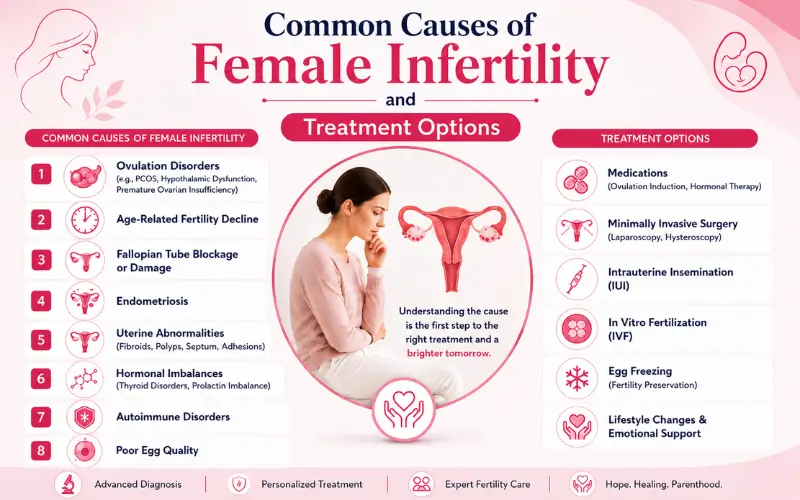
Many women have a goal in life of becoming mothers. Getting pregnant, however, is not necessarily as easy as it sounds. Infertility in women is a frequent and devastating condition that can impact their emotional, physical, and economic well-being. Luckily, many fertility problems can be diagnosed and treated with success due to advances made in reproductive medicine.
Knowing the causes of infertility is sometimes the first step to getting an effective solution. Today, there are many different treatment options available, and women can increase their chances of conceiving and having healthy pregnancies.
Women looking for high-quality fertility services in Dubai can benefit from an advanced diagnostic facility, a customized treatment plan, and complete reproductive care by taking the help of a fertility clinic with experience like Best Life Fertility Center.
This article explores the most common causes of female infertility and the treatment options available to support women on their fertility journey.
Understanding Female Infertility
Women under the age of 35 who have not been able to conceive after 12 months of regular unprotected sex are considered to be infertile. If they have been trying for six months without success, women over age 35 are typically evaluated by a fertility specialist.
For pregnancy to succeed, several complex reproductive processes must take place. For the egg to implant, the uterus must be receptive, and the fallopian tube must let the egg and sperm pass through.
When any part of this process is disrupted, fertility challenges may occur. Therefore, identifying the underlying cause is essential before beginning female infertility treatment.
How Common Is Female Infertility?
More people than they think suffer from infertility. Although both men and women can have fertility problems, the following female reproductive factors account for a large proportion of infertility cases.
Some factors may affect fertility, such as hormone imbalance, medical illness, reproductive disorders, lifestyle habits, and above all, age. Luckily, many of these concerns can be addressed by suitable fertility treatment for females.
Timely diagnosis can increase treatment effectiveness and offer women a broader range of options to consider regarding their reproductive health.
Ovulation Disorders
One of the most frequent causes of female infertility is an ovulation disorder. During ovulation, the ovary releases an egg that is ready to be fertilized by a sperm.
Irregular or complete absence of ovulation makes pregnancy more difficult.
Polycystic Ovary Syndrome (PCOS)
One of the most common causes of infertility due to ovulation is PCOS. Women who suffer from PCOS tend to have hormonal imbalances that disrupt regular ovulation.
Common symptoms include:
- Irregular menstrual cycles
- Male pattern baldness and excess facial/body hair
- Weight gain
- Acne
- Difficulty conceiving
Fortunately, there are fertility treatment for women that focuses on restoring regular ovulation that many women suffering from PCOS benefit from.
Hypothalamic Dysfunction
Hormones involved in the regulation of ovulation are produced by the hypothalamus. Disordered stress, undereating, vigorous exercise, or nutritional deficiencies may throw off hormone signals and prevent ovulation.
Hormonal therapies and lifestyle changes can help restore reproductive function in many instances.
Premature Ovarian Insufficiency
Premature ovarian insufficiency: When the functioning of the ovaries weakens before the age of 40. This can lead to decreased egg production and difficulty conceiving.
Fertility may be affected, but with early diagnosis, it is possible to discuss appropriate treatment and family building options with specialists.
Age-Related Fertility Decline
Fertility in women is affected by their age. Eggs are finite and over time, both quantity and quality of eggs decrease naturally.
Fertility starts to decline slowly after age 30 and drops more quickly after age 35. Chromosomal abnormalities are more likely to occur as women age, which might make embryo development more complicated and raise a woman’s miscarriage risk.
Not all causes of female infertility are reversible, but many women will have an improvement in the likelihood of them becoming pregnant as a result of modern treatment for female infertility.
So if women are considering having more children, they should have their fertility assessed if they have any concerns about the effects of reproductive ageing.
Fallopian Tube Blockage or Damage
Fallopian tubes are essential for the process of conception. They are responsible for transporting the sperm to the egg and where fertilisation normally takes place.
If the fallopian tubes are blocked or damaged, then sperm and egg can’t meet.
Tubal infertility can be caused by several reasons, such as:
- Pelvic inflammatory disease
- Previous pelvic surgery
- Endometriosis
- Sexually transmitted infections
- Scar tissue formation
Diagnostic imaging tests may be used to help determine if there are any abnormalities in the tube. Surgery or assisted reproductive methods, like IVF, may be necessary, depending on the severity of the blockage.
Endometriosis
Endometriosis is a disease that involves the development of tissue like the uterus lining outside the uterus.
This can involve the fallopian tubes, the ovary, and other structures in the pelvic area. As a result, fertility can be affected by inflammation, scarring, and adhesions.
Common symptoms include:
- Pelvic pain
- Painful menstrual periods
- Pain during intercourse
- Heavy menstrual bleeding
- Difficulty becoming pregnant
The effect of endometriosis on fertility is different for each woman. But fertility experts can often be able to suggest a treatment method that will enhance reproductive outcomes.
For some women, the course of treatment for fertility may include medication, surgery, or assisted reproductive technologies.
Uterine Abnormalities
The uterus is important for the implantation of the embryo and the development of pregnancy.
In some cases, structural defects may affect fertility or cause miscarriage.
Common problems with the uterus are:
Uterine Fibroids
Fibroids are benign growths that grow in or around the uterus. Though a lot of fibroids do not have any effect on fertility, bigger fibroids can affect the implantation process or change the shape of the uterus.
Endometrial Polyps
The polyps are growths that grow inside the lining of the uterus. Such growths can lead to decreased chances of implantation and fertility problems.
Congenital Uterine Conditions
In some women, there are anatomical variations that can have a negative impact on reproduction.
Luckily, numerous uterine disorders can be spotted with imaging tests and treated properly.
Hormonal Imbalances
The reproductive hormones are important for controlling ovulation, menstruation, and pregnancy.
Hormonal disorders can interfere with normal reproduction and may affect fertility.
Common hormonal issues are:
- Thyroid disorders
- Elevated prolactin levels
- Adrenal gland abnormalities
- Insulin resistance
Since many conditions that affect women’s fertility are hormone-related, proper diagnosis is essential for planning treatment for female infertility.
Unexplained Infertility
Sometimes, it isn’t possible to find a clear cause of infertility from a fertility evaluation.
This is termed unexplained infertility.
While the diagnosis may be upsetting, pregnancy is not impossible. Often, women who have unexplained infertility can conceive with a focused fertility treatment.
Depending on the person’s age and reproductive history, fertility experts may suggest ovulation-inducing medications, intrauterine insemination (IUI), or in vitro fertilization (IVF).
Lifestyle Factors That Affect Female Fertility
Lifestyle can affect reproductive health and fertility.
There are several reasons why fertility may be a problem, such as:
Smoking
Smoking may have adverse effects on the quality of eggs and ovarian function. In addition, it can also cause miscarriage and pregnancy problems.
Excessive Alcohol Consumption
Excessive alcohol consumption can disrupt hormone levels and reproductive well-being.
Obesity
Overweight can cause hormone issues and poor ovulation.
Being Underweight
Low body fat could also affect normal hormone production, which affects reproduction.
Chronic Stress
Although stress itself is not a cause of fertility problems, chronic stress can impact health and well-being throughout the fertility process.
A healthy lifestyle can contribute to reproductive health and work in conjunction with medical fertility treatments.
Treatment Options for Female Infertility
Infertility can be treated with various methods of modern reproductive medicine depending on the cause of the condition.
Fertility Medications
Fertility medicines are used to induce ovulation and to regulate hormone levels.
Medications used for women with ovulation disorders may be used in combination with other fertility treatments.
Intrauterine Insemination (IUI)
The IUI procedure is a technique in which the sperm are pipetted directly into the uterus during ovulation.
This treatment could be beneficial for some infertility issues.
In Vitro Fertilization (IVF)
IVF is one of the most effective fertility treatment methods for women. In the IVF procedure, the eggs are collected and removed from the ovaries, then fertilized in the laboratory and implanted in the uterus.
IVF might be considered for:
- Blocked fallopian tubes
- Severe endometriosis
- Age-related infertility
- Unexplained infertility
- Several unsuccessful fertility treatments.
Surgical Treatment
However, in certain cases, surgery may be suggested to remove fibroids, polyps, scar tissue, or endometriosis lesions that impact fertility.
Good reproductive results can be achieved in the right patient with surgical treatment.
Why Early Evaluation Is Important
Early diagnosis of many fertility conditions is more effective.
The following symptoms in women should warrant professional evaluation: irregular periods, pelvic pain, recurrent pregnancy loss, or difficulty conceiving.
When a woman is assessed early, fertility experts can determine if there are fertility problems and formulate a treatment plan that is tailored to her specific situation, so that her fertility doesn’t deteriorate any further.
Fertility clinics like Best Life Fertility Center offer thorough fertility assessments and cutting-edge fertility treatments that cover a variety of fertility issues.
Final Thoughts
There are numerous different causes of female infertility, such as problems with ovulation, growing older, fallopian tube issues, endometriosis, hormone problems, uterine irregularities or irregularities, and lifestyle. An infertility diagnosis can be quite devastating to receive, but today, there are more options available to help women conceive.
The first step is to determine the cause through a careful evaluation of fertility. Today, fertility treatments for women are increasingly providing hope to those who suffer from fertility issues, ranging from fertility medications and intrauterine insemination (IUI) to more advanced IVF procedures.
Women interested in fertility treatment in Dubai can find the right type of care from fertility specialists and reputable clinics like Best Life Fertility Center, offering customized treatment, cutting-edge fertility technologies, and holistic care for their fertility journey.
Must Read: Delma Park COVID Test: PCR Services, History and Current Status