





Best Invoicing Software for UAE Compliance
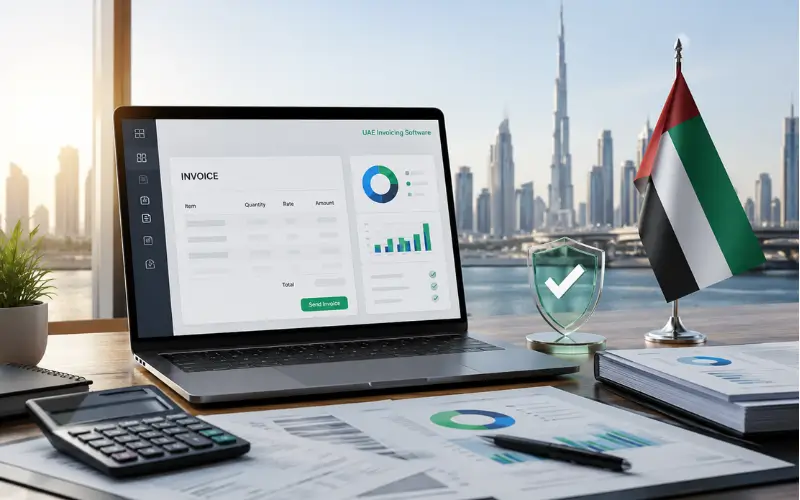
Companies throughout the UAE are racing to modernise their finance operations. Digital invoicing is no longer a nice-to-have. It is rapidly becoming mandatory for compliance too. The UAE has a well-developed VAT system, and momentum for structured e-Invoicing is being felt. Enforcing rules and directives on tax data, preparation of standard invoice formats, and audit preparedness are causing businesses to take the first step toward doing just this.
For many companies, however, this represents a fundamental shift in how invoicing is planned and executed, making a clear UAE e-Invoicing implementation roadmap essential before selecting the right invoicing software. The best platform will help your finance team stay compliant, eliminate manual effort from the process, and absorb an escalating volume of invoicing data without increasing operational burden.
Bad data, on the other hand, could subject you to errors, delays, and regulatory risk if you are in the wrong place at the wrong time. However, the key issue is that many of the companies within the UAE are still running with basic invoicing tools. These instruments might have served a purpose well in the long run, but they are not equipped to match the demands of today’s compliance requirements.
This article will help CFOs, finance managers, ERP leads, and tax professionals understand what to look out for when evaluating UAE e-Invoicing solution.
Why Basic Invoicing Tools May Not Be Enough
There’s a large contrast between this, with a little piece of equipment, and an authentic e-Invoicing service that’s optimized for compliance. Fundamental applications are created to generate and send invoices. And of course they do that job reasonably well in a simplified environment. But they often stop there. They do not validate tax data, enforce approval processes, or interface with your ERP system. They’re heavy on manual input, so human error is always in the mix. Consider what happens if your accounts payable team collects hundreds of invoices each month from various suppliers.
Some arrive by email. Others arrive via a portal. Each needs to be verified, matched to a purchase order, approved, and input into the accounting system. Most of that work is all manual with a simple tool.
And manual work means mistakes. Most businesses do not realize that invoice errors are more prevalent than they acknowledge. So when a tax amount doesn’t match, a TRN isn’t present, or an incorrect invoice date occurs, you can end up with non-payment, blocked claim, or a compliance violation during audit.
Finance teams put hours into fixing these problems, whereas money is spent on other work. Another weak point is the problem with reporting. Basic tools can lack reporting functionality.
They can tell you how many invoices you sent, but they can’t get a clear sense of outstanding liabilities, tax exposure, or approval bottlenecks. When senior finance leaders or auditors request a comprehensive breakdown, the team scrambles to scrape data from several different sources and put it together manually.
But as UAE compliance requirements are increasingly structured, the disparity between those basic tools and what a business needs is widening. Finance teams need better visibility, a greater degree of control, and more automation. Enter proper e-Invoicing software.
Features Finance Teams Should Check
Before choosing any e-Invoicing software, their finance team should possess a set of must-have features. A list of top ones, including which of them to prioritize here. It’s all built on invoice automation. It needs to be capable of automatically capturing invoice data, comparing it to purchase orders and delivery records, and routing the data for approval by the software without human intervention.
This saves a lot of time, and it also decreases the risk of mistakes. Approval workflows matter more than teams understand. If there’s no established approval process, invoices end up languishing in inboxes for days or are approved with no review. Good software provides you with the ability to create hard-and-fast rules: who approves what, in which order, and what happens if someone doesn’t respond in time. Support in tax calculations is a must for UAE e-Invoicing.
The software needs to compute VAT and must apply the corresponding tax rate according to the transaction type and flag discrepancies before an invoice is finalised. Finance management needs visibility through dashboards for reporting. It should ensure you see the status of invoices as they’re being processed, recognize overdue approvals, track up-to-date tax matters, and create reports for internal review/audits.
Storage and retrieval of documents are sometimes ignored until there exists an audit. You also need to maintain invoices stored securely in your software and make them searchable for the appropriate period for UAE laws to be followed.
Look for Structured Invoice and Tax Data Support
Essentially, structured invoice data ensures that within an organization, every invoice your business creates or receives is in the same format every time. You will have the same fields in the same place every time. Clearly defined, along with machine-readable invoices with number, invoice date, supplier TRN, customer TRN, line-item details, tax amount, and total value.
That may sound easy to imagine, but a great many businesses get their invoices in dozens of forms. Some come as PDFs. Others arrive as spreadsheets or paper documents. Some of these are complete with the required fields. An inconsistency of this kind of information has serious compliance risk–if things go wrong, for example.
Where your invoicing is inconsistent or incomplete, several problems can result. When invoices are inaccurate, tax returns may not be accurate. Audits become stressful because you cannot easily access the records that you require. Because there exists no specific audit trail, disputes with suppliers take longer to address. And your finance department squanders more time repairing information than creating significant work.
For UAE e-Invoicing in particular, structured data is the baseline requirement rather than a nice-to-have. With the regulatory environment further developing, companies with structured invoice data will find it much simpler to stay ahead.
Check ERP Integration and Audit Trail Capabilities
ERP integration is the idea that your invoicing software will work with your core business systems (ERP) such as the accounting system, procurement system, and any other finance software that you use. There’s no need for anyone to enter information between these two systems; data freely circulates between them. When your invoicing software is not connected to your ERP, the team needs to manually move data between systems.
It duplicates records, introduces errors, and pulls everything down. If you approve an invoice in one system, it may not show up in another for days. Reconciliation is a headache monthly. In the UAE, ERP is required for mid-sized and enterprise firms. Running SAP, Oracle, Microsoft Dynamics, or any ERP system you wish, your invoicing software should natively be integrated.
That’s real-time sync of data, not file imports that are performed once a day. In addition, good integration means purchase orders, delivery notes, and invoice data are automatically matched. When there is a difference, the system detects it and directs it for review. And this three-way matching process is a standard best practice for accounts payable and an excellent indicator of compliance maturity.
So are audit trails. An audit trail is a time-stamped record of everything that happens to an invoice from the time it enters the system. Who created it. Who approved it. Who made changes and when. What status it passed through. This level of transparency matters not just for UAE tax compliance, but also your internal controls.
Conclusion
So, choose good software for UAE compliance if you’re looking for something you can use to send invoices quickly. It is more than just that, as it is creating a finance operation that can meet increasing regulatory expectations, grow with your business, and allow your team the visibility and control they require to deliver results effectively. Basic invoicing tools are not designed for that kind of work. While they will serve to alleviate some of your administrative burden, they will do nothing to shield you from compliance exposure or to ready you for the shift toward structured e-Invoicing in the UAE.
The correct e-Invoicing system will automate your workflow, validate your tax data, integrate with your ERP, and provide a complete audit trail for every transaction. It will lessen the laborious work that slows your team and boost the precision auditor and regulators alike are looking for.
The financial executives and ERP departments that are willing to dedicate time to proper software analysis today will have a significantly better ability to keep up with the ongoing growth of UAE e-Invoicing requirements. The focus is not so much on compliance today. It is building a foundation for digital finance: the foundation that will be able to support your business for years to come.
Must Read: ADDC Quick Pay Guide for Fast and Easy Bill Payment in Abu Dhabi